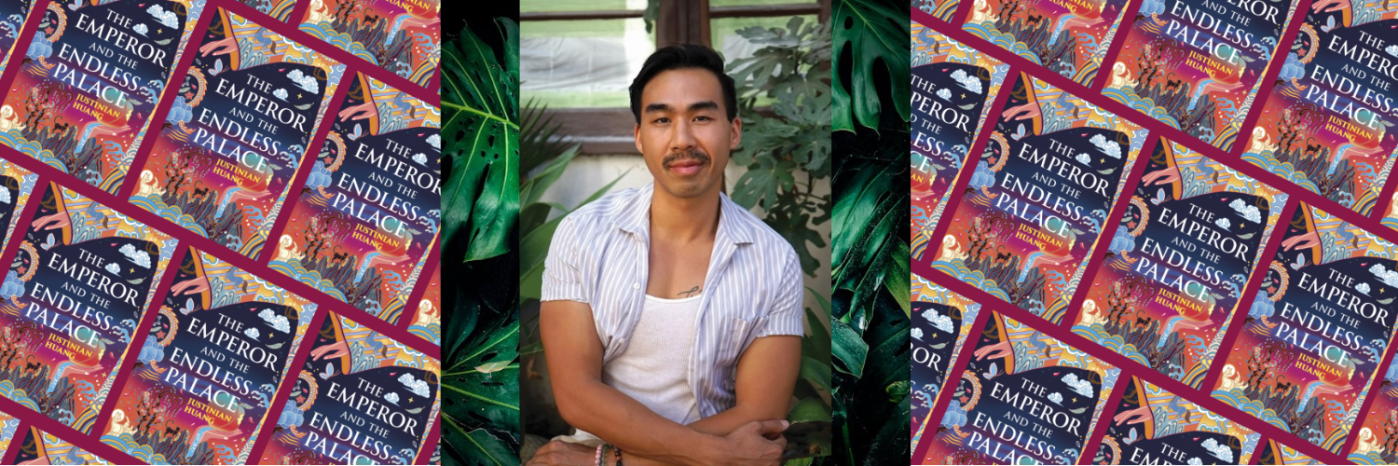
Justinian Huang, former head of development of Pearl Studio Shanghai and vice president of creative for Sony Pictures Animation, published his first novel “The Emperor and the Endless Palace,” creating a gay Asian love story that transcends time.
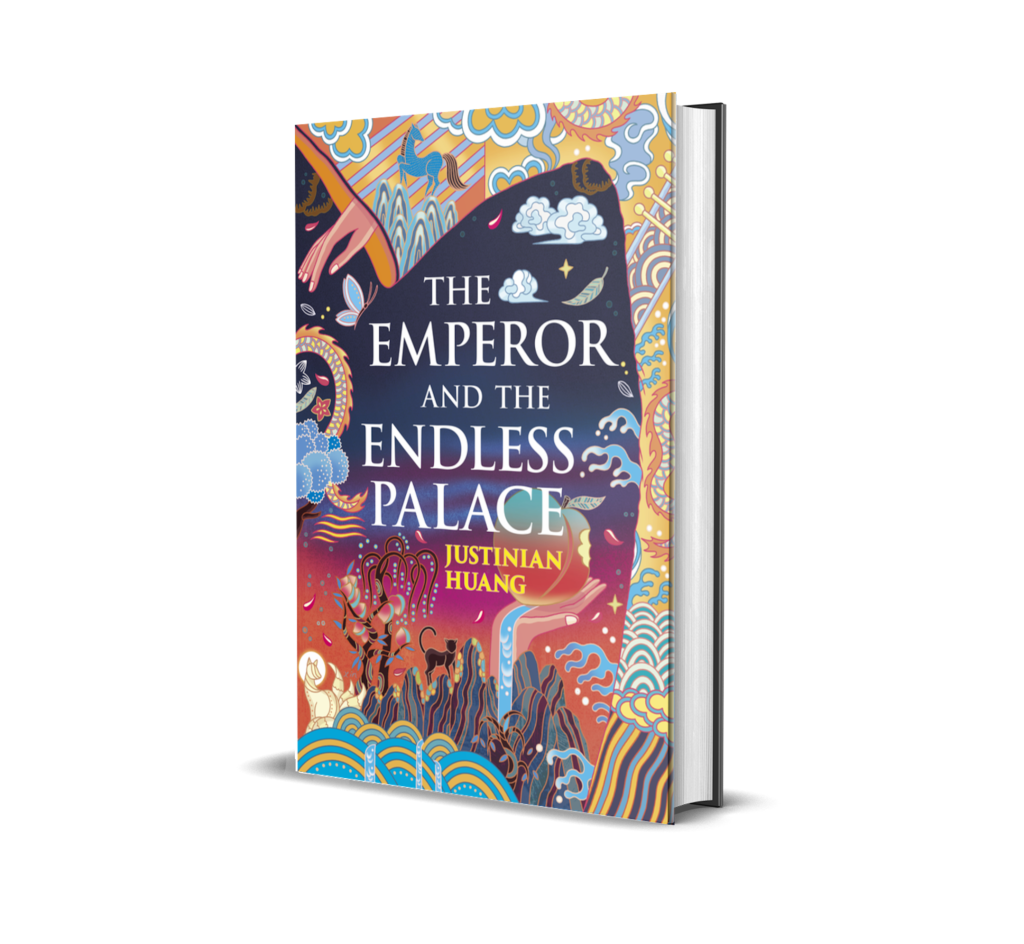
AUTHOR’S NOTE: The Emperor and the Endless Palace is a heart-pounding romantasy, full of shocking twists, morally shifty characters, and erotic thrills. When it comes to the romance within this novel, you can expect equal parts mess and swoon, but its central thread is an epic tale of true love against all the odds.
If you haven’t read the book yet, my first piece of advice is to buy it from brick and mortar/small business book shops. A lot of people don’t know this, but sales from Amazon only count for half of the numbers when it comes to calculating best seller lists! So if you’re not buying during opening week, please try to purchase from your local bookshops! And if you prefer to listen to audio books over reading physical books, I highly recommend this audio book! Read by Dylan J. Locke, Will Dao and Telly Leung, with each narrator portraying a different timeline, the audio book is done masterfully.
Now on to the book!
When I say that the novel is a gay love story that transcends time, I meant it quite literally. The story follows a couple who meet each other over the span of three life times, from 4 BCE and 1740 CE all the way to present day. Huang does this quite beautifully, the settings are painted vividly for each era and the dialogue always stays within their lanes. Each story line between the three is attractive in their own way and while the essence of the characters prevalent in each age, the timelines are not at all repetitive. Each chapter ends on a cliff hanger and then switches to the next timeline, so it’s easy to stay excited and keep turning those pages.
In Justinian’s pre-release marketing, he wasted no time in communicating to his audience just how spicy this “romantasy” was. The phrase “authors write about what they know” proves true and Huang knows Asian men. Written elaborately and extremely nuanced between each era, he describes the characters and their “actions” delicately, and “roughly” when the time called for it. The scenes were more than enough to get the juices flowing and he showed unnerving creativity, especially when it came a certain scene involving a needle. It was the little details and how each interactions were fleshed out from beginning to end, that made us empathize with the characters. Subtle eye contact with a crush from across the dance floor, cigarette butts next to the mattress on the floor of the artist’s studio, walks of shame. We’ve all been there. And his use of the word “influence,” in place of overused and corny substitutions like “member” or “shaft,” was so tasteful that it made reading the erotic scenes feel a little classy. But maybe that’s just me.
In terms of it being a romance fantasy novel, there’s definitely a decent amount of both. From the fantasy period piece sides, you have fox spirits (forever and always a queer mythical icons), an empress with gnarly teeth and a eunuch manservant (again queer icons, BOTH OF THEM), and even dragons and then in the modern day story line, statues and glowing ancient artifacts that bring you into a spiritual realm/trance. It’s everything you need from an Asian fantasy novel. In terms of romance, I find that this novel holds the word very well. Everybody expects the cheesy lines and giant sacrifices in a romance novel, but I think Huang does romance so real and intimately for his characters. These relationships are so nuanced that it’s too relatable to feel like the great love stories from another age. And that’s not a bad thing. We’re reading these stories across all three lifetimes and we’re still able to find ourselves in these characters, we’ve made the same choices and we’ve faced similar problems in relationships. All of this is why I love the ending. It feels real. It doesn’t feel like he wrote each character’s endings to make us happy, he wrote it that way because that’s how the characters are and that’s what they would have done.
After reading the novel and researching more of Justinian’s process in creating his debut novel, I learned that the story arc for 4 BCE is actually inspired by a Chinese Emperor who cut the sleeve off his imperial garment so that he would not awaken his lover. Other mythical elements in the book like the fox spirit are common links in any Asian fantasy, but Huang actually studied and spoke to Chinese historians about this “cut sleeve” story to gain a deeper understanding of it’s impact. While research is critical to any writing process, this connection is so profound because it could herald in or even uncover more LGBTQ+ stories hidden in our histories, just waiting to be reimagined. I hope that this attention to detail and eagerness to learn from the cultural source inspires other writers to look into their culture and its precolonial histories.
Overall, Justinian Huang’s debut novel, The Emperor and the Endless Palace, was a successful first novel and I can’t wait to see what else he puts out! Huang showed just how sexy Asian men and their “influence” can be with a GAPING Rating of 4/5 fingers that filled the hole in representation!
Huang’s second novel, “Lucky Seed,” is now available for pre-order here!
The author was also generous enough to grace the public with a small excerpt of his new work for Lunar New Years on Instagram.
 G.A.P.I.N.G. Magazine
Leave a comment