Girls Like Girls, directed by Hayley Kiyoko and co-written by Kiyoko, Stefanie Scott, and Chloe Okuno, feels like a love letter to their younger selves—and perhaps to all of us who grew up wondering what young queer love could have looked like. The film transports us to a time when uncertainty surrounded our identities, while our feelings somehow remained the one thing we knew to be true. It is the high school romance many queer kids dreamed about growing up, and one that a lucky few may have even experienced.
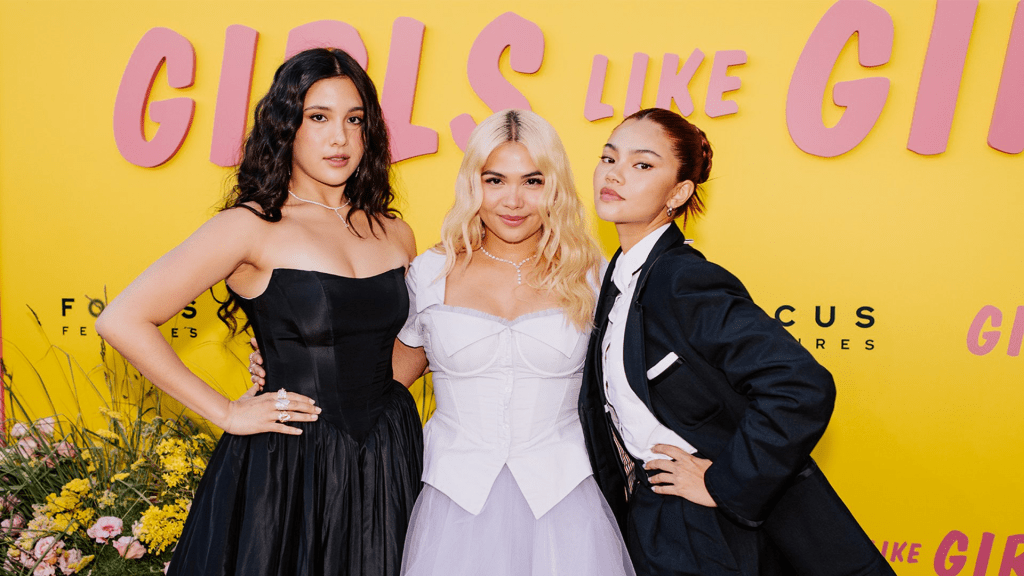
The film stars Maya da Costa and Myra Molloy in their first feature-film lead roles, and both immediately command the screen. Da Costa, as Coley, gives a vulnerable performance that captures the confusion, excitement, shame, and longing that comes from being a queer teenager. Molloy’s Sonya, meanwhile, draws us in like a siren—popular, flirtatious, kind-hearted, and effortlessly magnetic. She is the girl many of us either wanted to be or wanted to be with in high school.
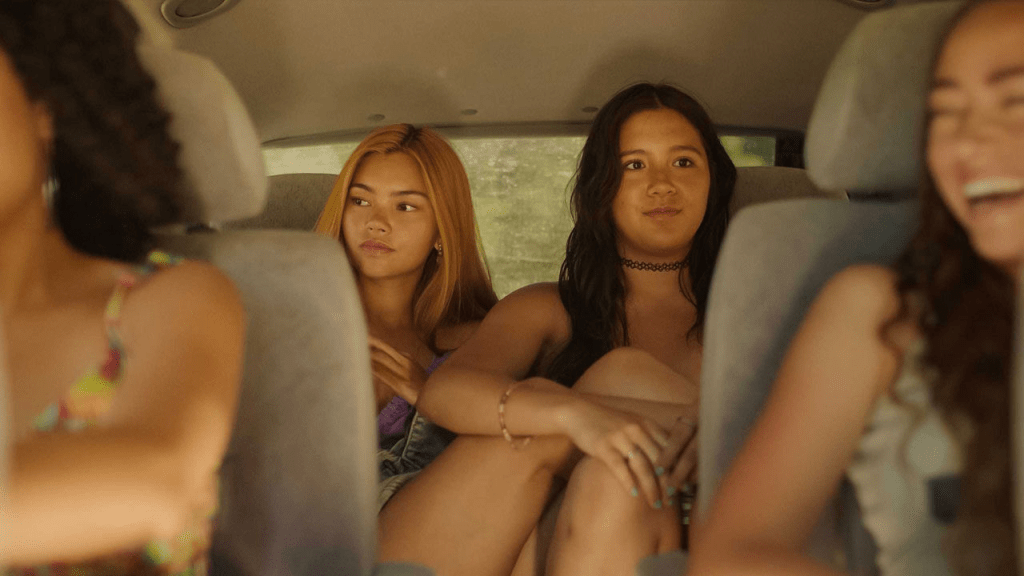
The film establishes its world quickly: a small town, summer break, and two soon-to-be high school seniors navigating the awkward space between adolescence and adulthood. But what really pulled me in was the moment Coley sits down at her computer and adds Sonya on AIM.
Okay, dial-up. We love a period piece.
Yes, I consider this a period piece. AIM may seem like a small detail, but for millennials, it carries an entire emotional history. The platform is obsolete now, but for many of us, those little away messages, screen names, and late-night conversations hold some of our fondest memories—and, for some, even painful ones. The nostalgia isn’t simply aesthetic. The film uses this time period to remind us that being queer in high school, particularly in a small town, wasn’t always something you could openly embrace.
That sense of repression becomes one of the film’s most affecting themes. Girls Like Girls understands the inner turmoil many of us carried through adolescence: the shame we placed on ourselves for being queer, the angst that accompanied our desire to be understood, and the ways we sometimes interpreted concern or sympathy from others as pity. Looking back, we can recognize how much of that pain came from simply not knowing how to accept ourselves yet.
And that’s where Kiyoko’s film feels almost therapeutic.
There are moments when Girls Like Girls is so nostalgic that it becomes uncomfortable—in the best possible way. Some of us may cringe watching Coley and Sonya because we recognize ourselves in them. We remember the things we said, the ways we acted, the relationships we mishandled, and the versions of ourselves we were desperately trying to hide. Kiyoko gives us the opportunity to look back at those younger versions of ourselves with something we may not have had back then: compassion.
The soundtrack, also featuring queer artists including Gigi Perez and August Ponthier, further deepens that nostalgia. Songs like “Lungs,” which accompanies the blossoming friendship between Coley and Sonya, and “Falling Through,” as Coley begins coming into her own, give the film an emotional rhythm that makes its most intimate moments feel even more personal.
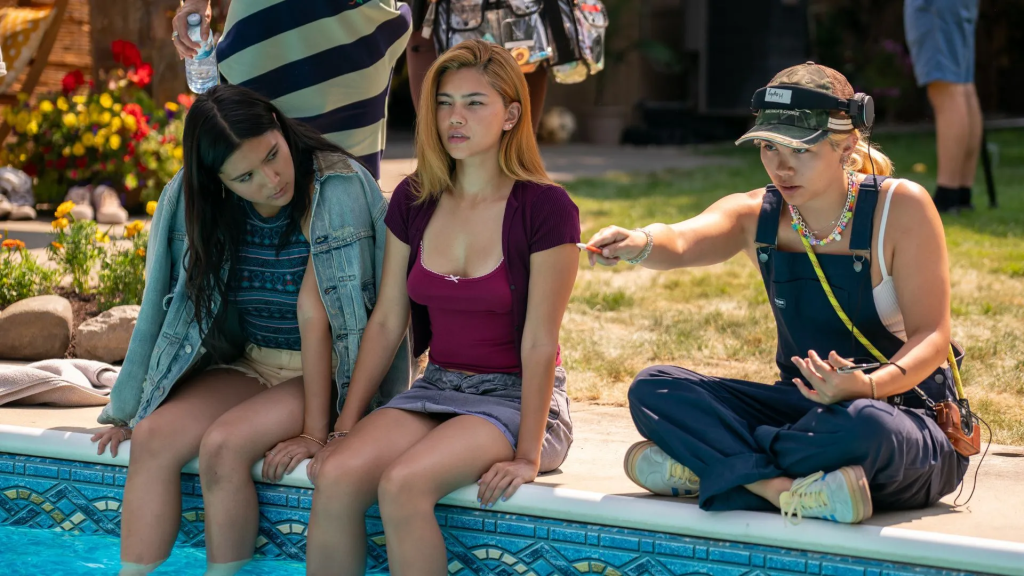
But perhaps what Kiyoko does best is demonstrate just how intentional this entire project is. Lines in the film are drawn from her own experiences. Items featured throughout the production came from her personal collection. The music reflects her own feelings and experiences. Nothing feels incidental.
Girls Like Girls is a labor of love, and you can feel that love in nearly every frame.
What makes the film so special isn’t simply that it tells a queer love story. It’s that Kiyoko gives us the opportunity to revisit the stories we once told ourselves about being queer—and perhaps rewrite some of them. For queer millennials who grew up without seeing romances like this reflected back at us, there is something deeply comforting about watching Coley and Sonya find each other.
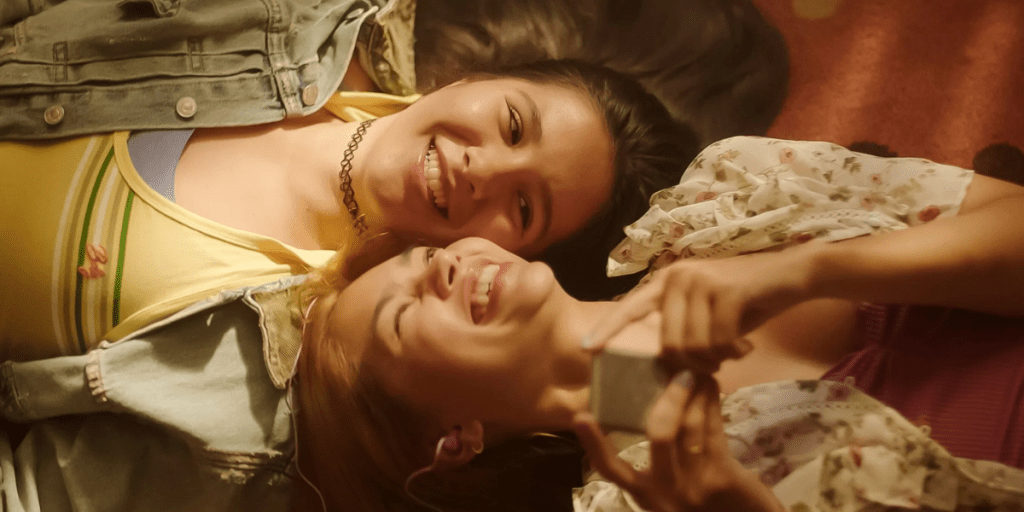
Maybe that’s the greatest gift Girls Like Girls gives us: the chance to look back at who we were, remember what we wanted, and finally offer our younger selves the love and understanding they deserved.
For a generation that spent so much time searching for itself in other people’s stories, Girls Like Girls feels like coming home.
Girls Like Girls is now streaming on Peacock with subscription and available for rent or purchse on Amazon Prime Video, Apple TV, and Fandango at Home.


Leave a Reply